
Inter-floor Robot Integrated with Elevators
In the trend of Smart Building development and operational automation, inter-floor robots are becoming a technology solution of interest to many businesses and modern buildings. Beyond self-driving capabilities, next-generation robots can connect directly to elevator systems to move between multiple floors completely automatically.
The inter-floor robot solution integrated with elevators helps optimize operations, reduce reliance on personnel, and improve service experiences in hospitals, hotels, offices, and shopping centers.
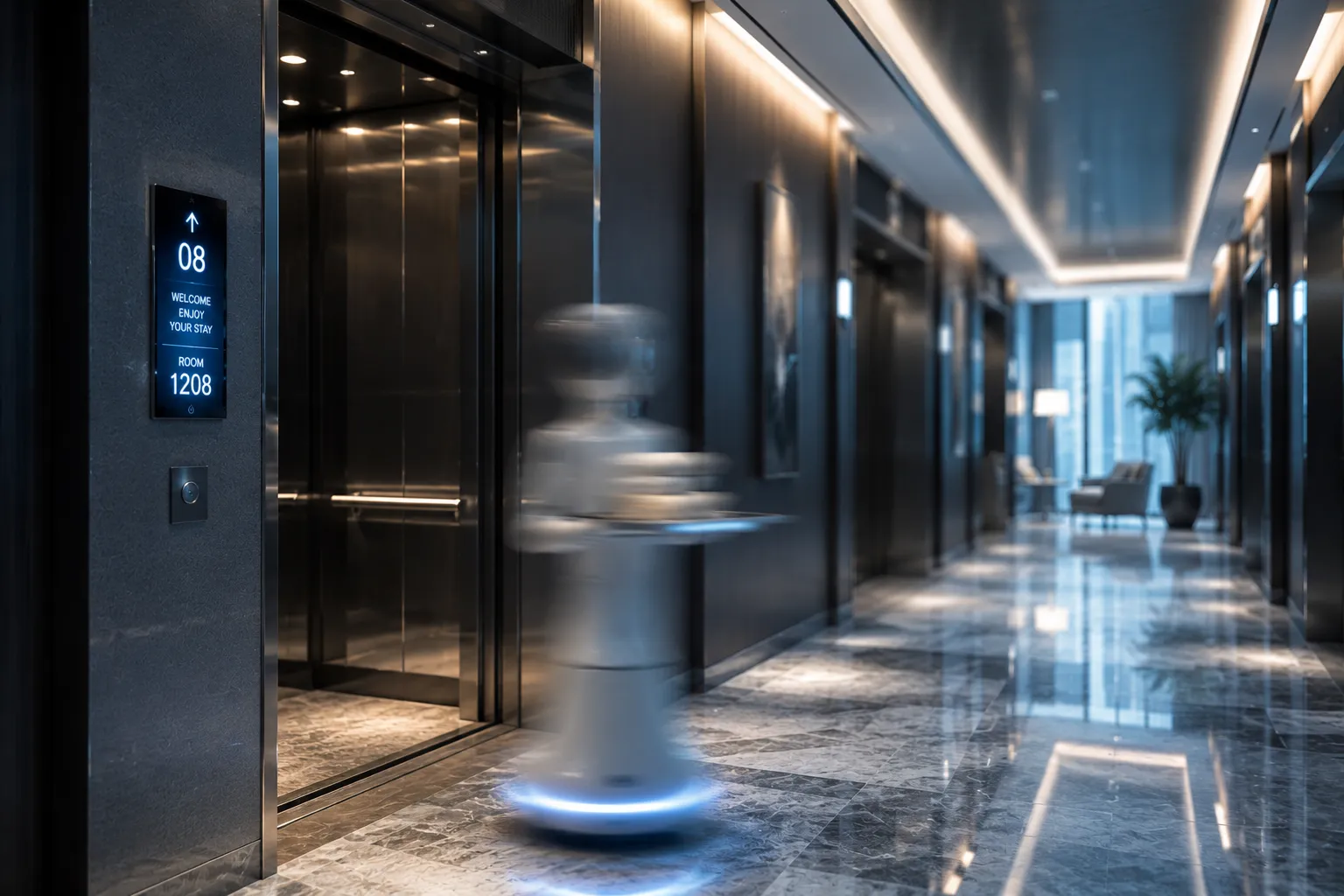
How Do Inter-floor Robots Work?
Inter-floor robots are autonomous mobile robots integrated with the ability to communicate with the building's elevator system. Instead of only operating on a fixed floor, the robot can move between multiple floors to perform transportation tasks or support services.
The operational process typically includes:
- Robot receives tasks from the management system
- Robot self-navigates to the elevator area
- System sends signals to call the elevator
- Robot identifies the suitable cabin and moves inside
- Elevator takes the robot to the required floor
- Robot continues its mission at the destination
The entire process is operated automatically without human intervention.
Thanks to smart self-positioning and navigation, robots can operate continuously in complex environments with high foot traffic such as:
- Hospitals
- Hotels
- Offices
- Shopping Centers
Elevator Integration Technology
For robots to operate inter-floor effectively, the system needs to integrate many modern technologies to ensure stable connectivity and precise navigation.
Elevator Connection API
APIs are the platform that allows robots to communicate directly with the elevator control system. Through API, robots can:
- Call the elevator
- Select floors
- Determine cabin status
- Check availability
This solution helps robots operate synchronously with building infrastructure without manual operations.
IoT and Data Connectivity
IoT plays a vital role in connecting robots with:
- Building Management Systems (BMS)
- Environmental sensors
- Security cameras
- Central control systems
Real-time synchronized data helps robots:
- Update operational status
- Optimize routes
- Handle situations more flexibly
Additionally, businesses can monitor robot activities remotely through a smart management dashboard.
Operational Benefits of Inter-floor Robots
Optimization of Human Resources:
Robots help reduce the workload of repetitive transport between floors. Personnel can focus on tasks requiring expertise and customer interaction instead of manual transport.
24/7 Continuous Operation:
Robots can operate stably around the clock with consistent performance. This is especially important for:
- Hospitals
- Hotels
- Logistics centers
- Large buildings
Enhanced Service Experience:
Implementing robots enhances the professional and technological image of the business. Customers will have a more modern experience when:
- Receiving automated services
- Reducing wait times
- Increasing convenience
Future Trends of Inter-floor Robots
In the future, inter-floor robots will not only stop at transportation but also integrate:
- Conversational AI
- Advanced smart navigation
- Operational data analysis
- Smart Building Platform integration
Robots will become an important part of the smart building ecosystem and modern automated operating models.